


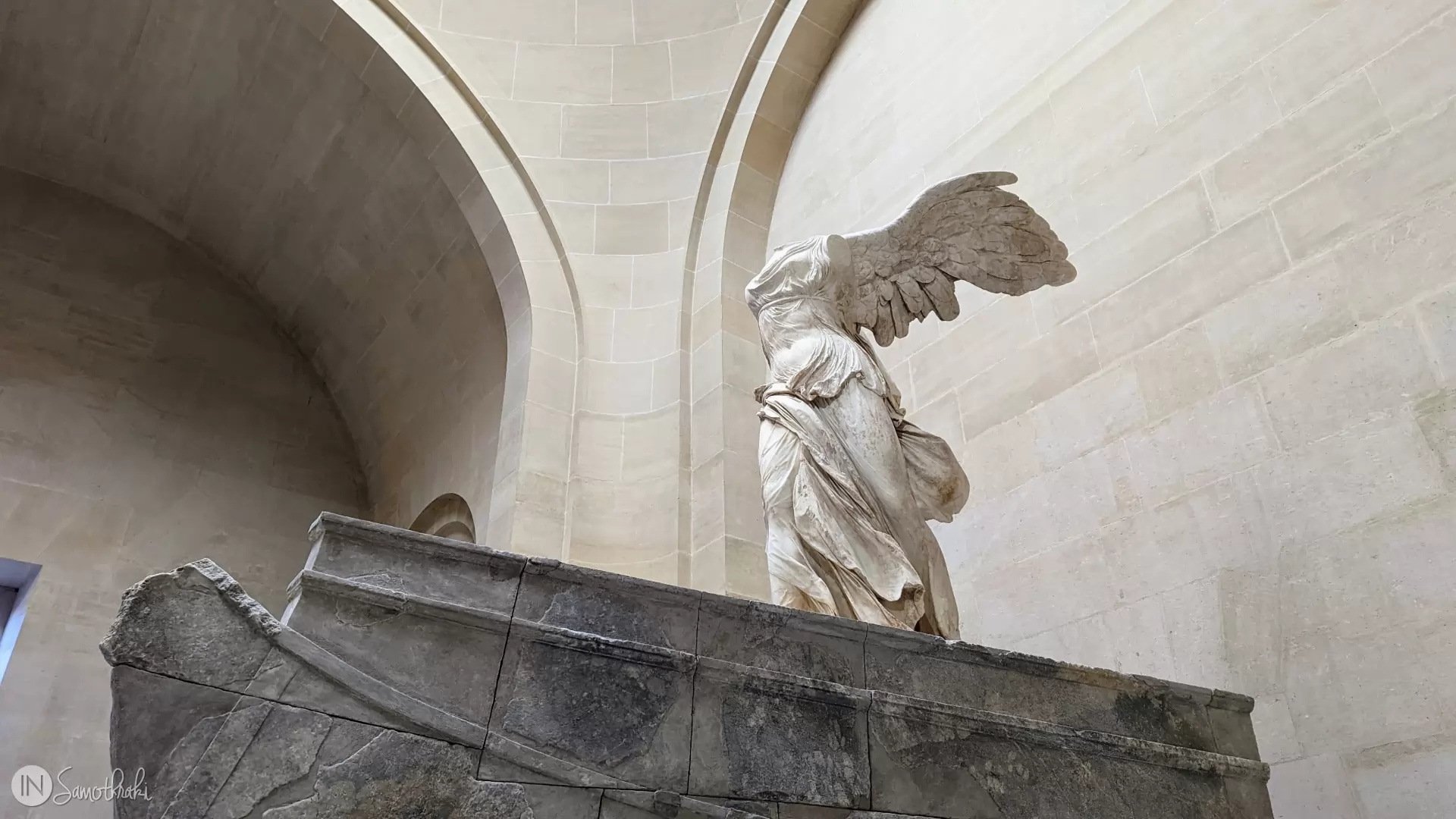
The statue of the goddess Nike (in Greek, Niki) from Samothrace, also known as the "Winged Victory of Samothrace" is, without a doubt, the most famous symbol of the island. Its fame has reached all corners of the world, and it is regarded as a masterpiece of antiquity.
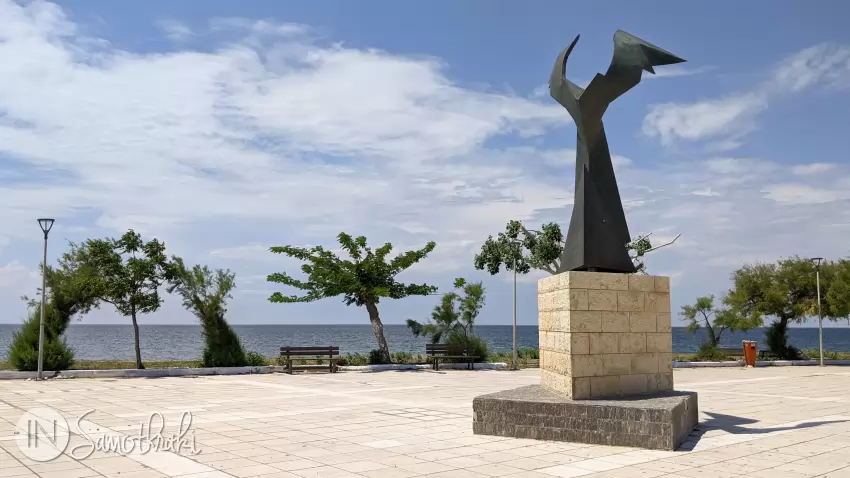
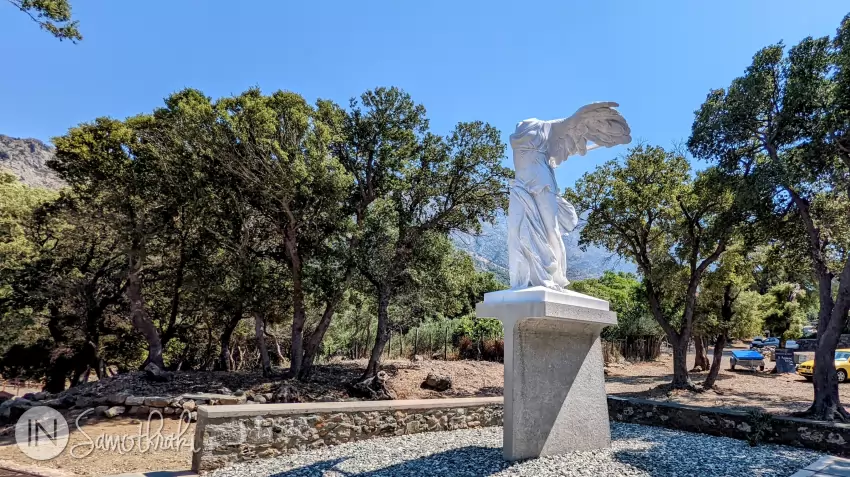
The original statue is located today at the Louvre Museum, but its memory is as vibrant as ever in Samothrace. Representations and mentions of Nike are found all over the island - from its faithful copy, located in front of the Archaeological Museum in Palaiopoli and the modern sculpture in Kamariotissa, to souvenirs in shops or the names of cafés like I Gonia tis Nikis ("Nike's Corner"), associations (Niki - The Agricultural Cooperative of Women of Samothraki or the Niki Olive Growers Cooperative), or hotels (Hotel Niki Beach or Victory Apartments Hotel).
The Discovery of the Nike Statue and the Journey from Samothrace to Louvre
On April 15, 1863, Charles Champoiseau, vice-consul of France in Adrianople (today Edirne) and also an amateur archaeologist, found parts of a statue's body on the small island of Samothrace, then ruled by the Turks. The one who made the discovery was a Greek worker involved in the excavations, who shouted to Champoiseau: "Sir, I've found a woman!"
The statue was found scattered in 118 pieces, in the area of the Sanctuary of the Great Gods. This fragmentation is also explained by the working method of artists in the Hellenistic period: first, the component parts were created, which were then assembled. It is assumed that the sculpture collapsed and broke as a result of a major earthquake, around 60 AD.
Immediately after the discovery, Champoiseau sought approval from the Ottoman Empire to send the statue to France. A French warship was used for transport, and on May 11, 1864, Nike arrived at the Louvre. During the renovation that took place between 2013-2014, museum specialists concluded that the sculpture had suffered damage during that journey.
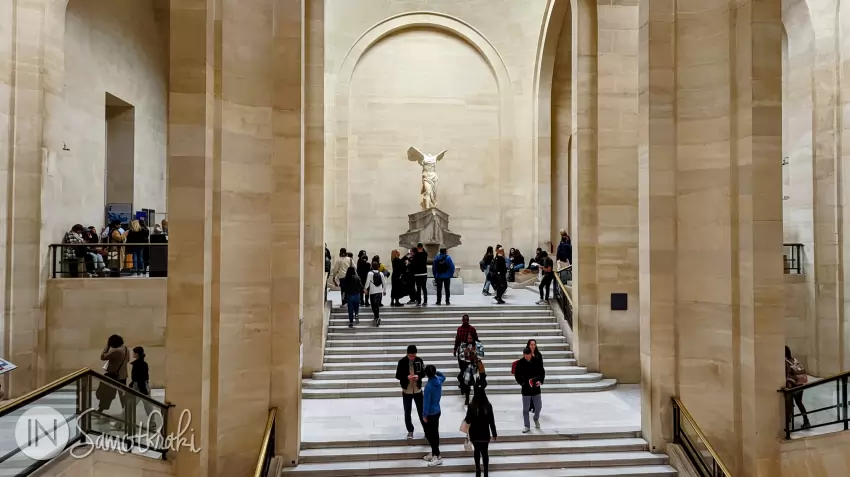
In 1866, Nike was exhibited for the first time in the museum, but without the prow on which it rests today. It wasn't until 1875 that Austrian archaeologists conducting research in Samothrace realized that the pieces of gray marble Champoiseau had ignored, believing they belonged to a funerary monument, actually constituted the ship's prow that the ancient artist had sculpted as a base for the winged goddess. The prow was also transported to the Louvre, so since 1884 the reassembled statue has been exhibited at the top of the Daru Staircase.
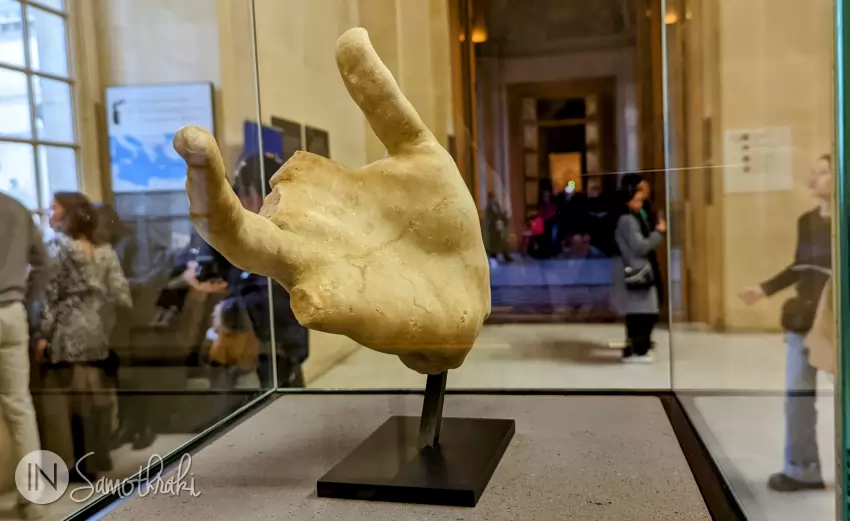
During excavations conducted much later, in 1950, Karl Lehmann and his team of archaeologists found the statue's right palm in the area where the initial discovery was made. Two fingers were discovered by Lehmann's wife, Phyllis Williams, in Vienna, among fragments from 19th-century excavations held in a warehouse of the Art Museum. These parts also made their way to the Louvre Museum, and are today restored and displayed in a glass case, on the left side as you look at Nike.
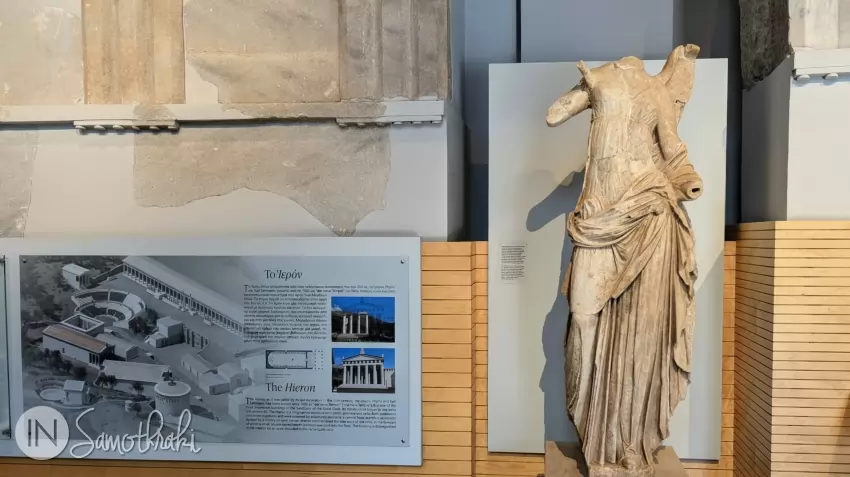
Two other statues of the winged goddess Nike have been found over time in the Sanctuary of the Great Gods. The first is a Roman-era copy found by Austrian archaeologists, and is today exhibited at the Kunsthistorisches Museum (Museum of Art History) in Vienna. The second was found in 1949 by American archaeologists and is located in the Archaeological Museum of Samothrace.
Who Made the Winged Victory of Samothrace and When?
For a long time, it was believed that the statue was a token of gratitude offered by Demetrius Poliorcetes (337-283 BC) after defeating Ptolemy's fleet off the coast of Cyprus, around 290 BC. Today, the most accepted hypothesis is that the work was commissioned at the end of the 2nd century BC from the sculptor Pythokritos by the inhabitants of Rhodes, to thank the Great Gods for the naval victory obtained against Antiochus III of Syria.
What is known for certain is only that the statue was intended to commemorate a sea battle and that it was created in the Hellenistic era, probably between 220 and 185 BC.
The goddess Nike is depicted landing on the prow of a ship, with her wings spread, visible from afar. Her role was to announce victory and, most likely, she had her right arm raised - and here, opinions are divided: either to salute, to trumpet the triumph, or to hold a crown.
Nike of Samothrace, a Masterpiece of the Ancient World
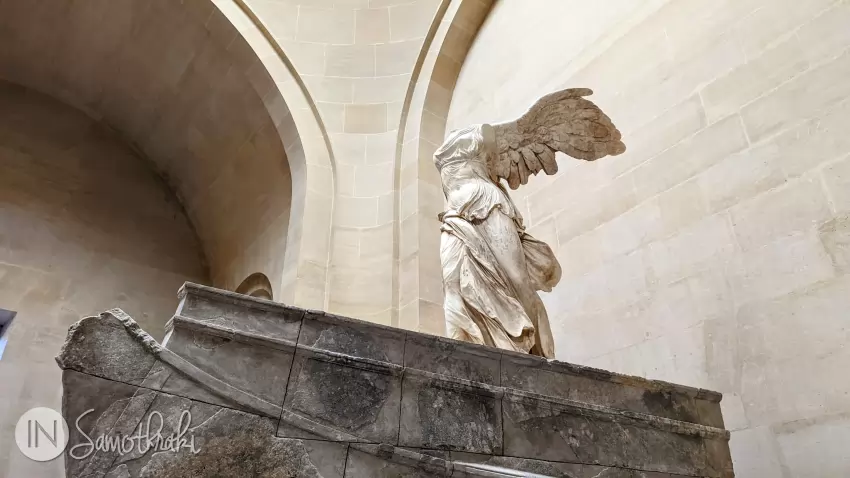
In its current form, Nike is composed of several main pieces: a large section from the bust to the feet, the upper part of the torso, and the wings. The left wing was reassembled from multiple fragments, while the right wing, of which only a few small parts had been found, was reconstructed by specialists at the Louvre, mirroring the left one.
The statue is monumental, measuring (including the prow) 5.57 m in height, and is constructed from white Parian marble. The ship's prow on which it rests is made of gray Rhodian marble.
Given that its left side is more meticulously crafted, it is presumed that the sculptor's intention was for the statue to be seen by the public from the left side, at approximately a three-quarter profile. This procedure was common during the Hellenistic period.
Although the statue's head and arms have not been found to this day, this fact seems only to increase the expressive force and charm that Nike exerts upon the viewer.
The Restoration
In 2013, the Louvre Museum organized a fundraising campaign for the restoration of the Nike of Samothrace. 4 million Euros were raised, making it possible to begin the work.
Between 2013-2014, the statue was cleaned and carefully analyzed, at which time blue paint pigments were discovered, leading to the hypothesis that, initially, at least part of the statue was colored.
Repatriation Attempts
In February 1999, the inhabitants of Samothrace sent several letters to politicians in Greece, requesting the return of the statue to the place where it was found. However, these efforts yielded no result.
In August of the same year, the American artist Max Mulhern created a modern aluminum replica of the statue, which he personally brought to the island to offer as a gift to the inhabitants. However, the Greek Ministry of Culture did not agree to its placement on the original site, so the new statue was buried somewhere near the sea. The story of this statue's journey to Samothrace was described in the documentary Max et la sculpture qui marche.
Another attempt to bring Nike back to its native country was made by Greece in 2013, but without success.
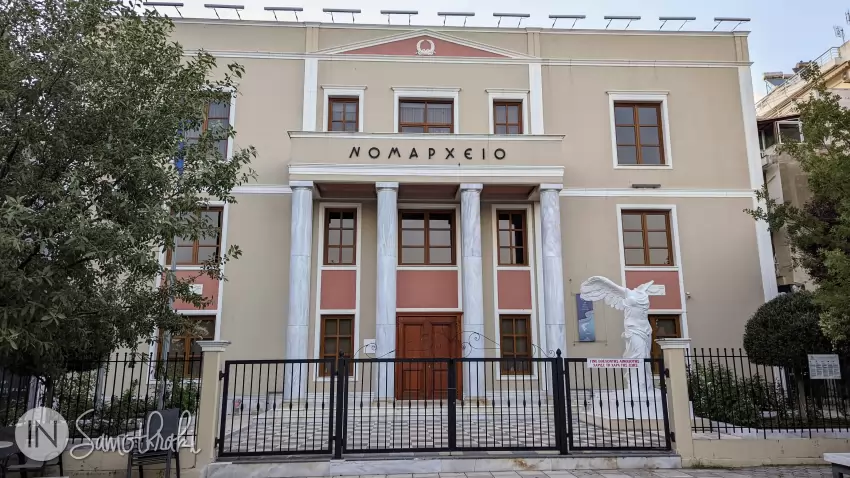
Those who visit the island of Samothrace today can only see an exact copy of the statue, made of Thassos marble and displayed since the autumn of 2021 in front of the Archaeological Museum in Palaiopoli. Another faithful copy, made by the same company, is also located in front of the Prefecture in Alexandroupolis.
In 2023, the Ephorate of Antiquities of Evros created a website about the Nike of Samothrace.

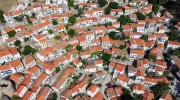 Chora, the Perched Capital of Samothraki
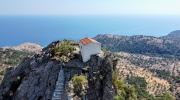 Panagia Krimniotissa, the Church on the Rock
 Therma - Mountains and Sea in Samothraki
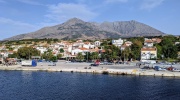 Kamariotissa - Welcome to Samothraki!
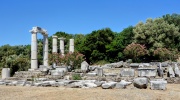 Sanctuary of the Great Gods in Samothraki
Have you been there?
Tell everyone about your experience!