


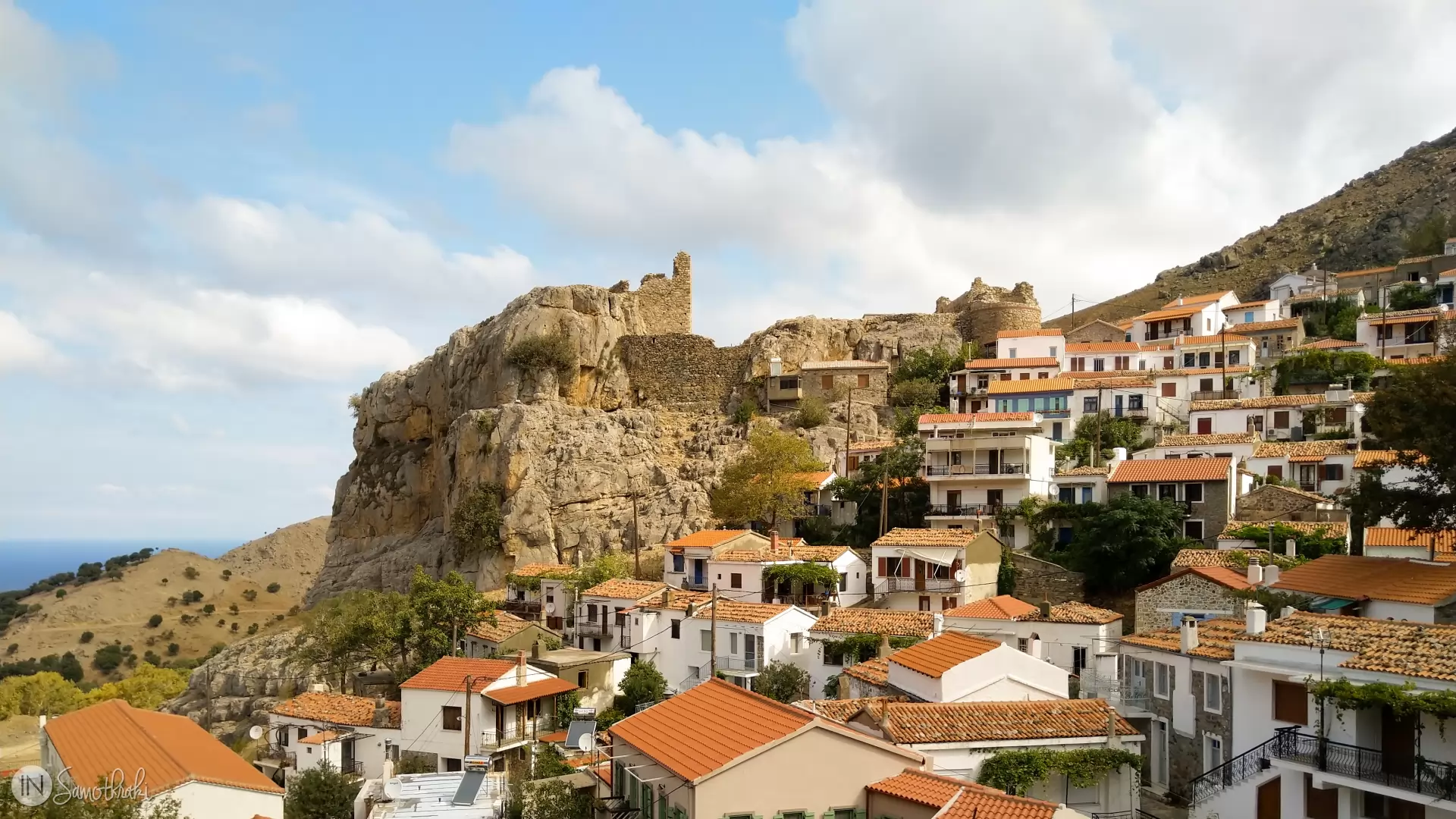
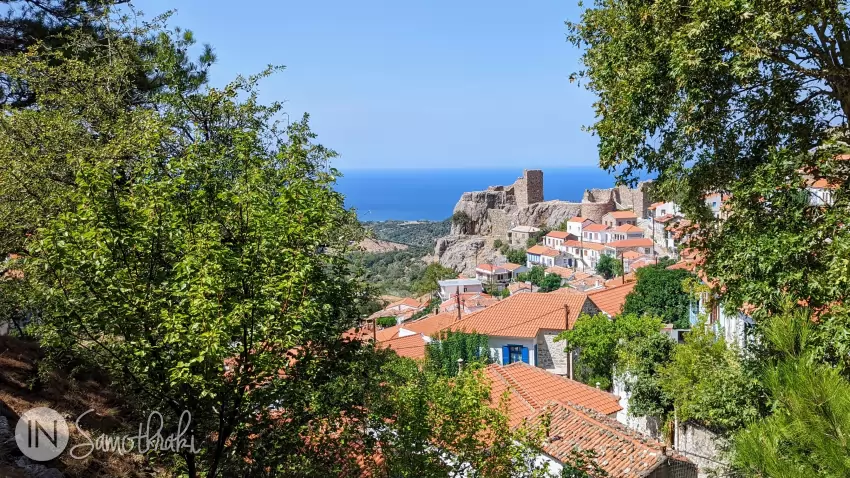
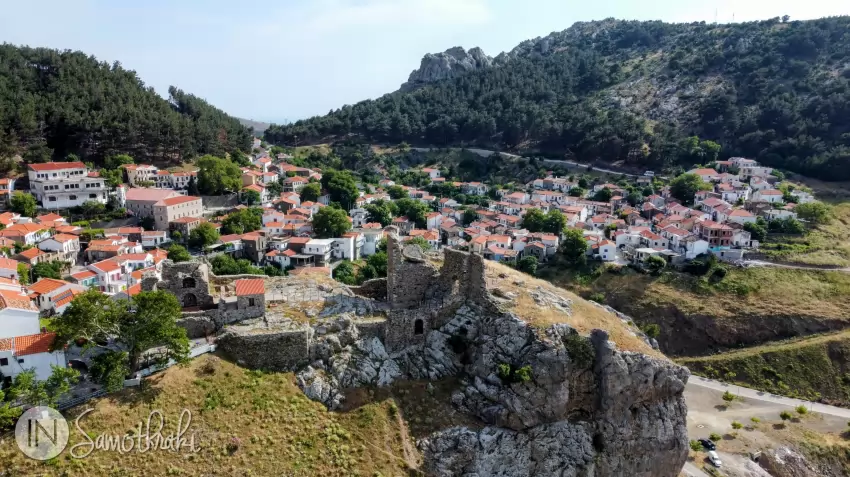
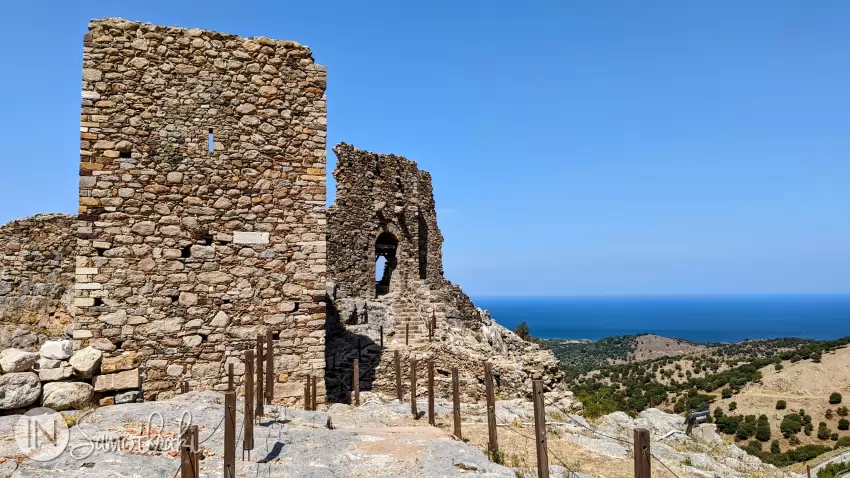
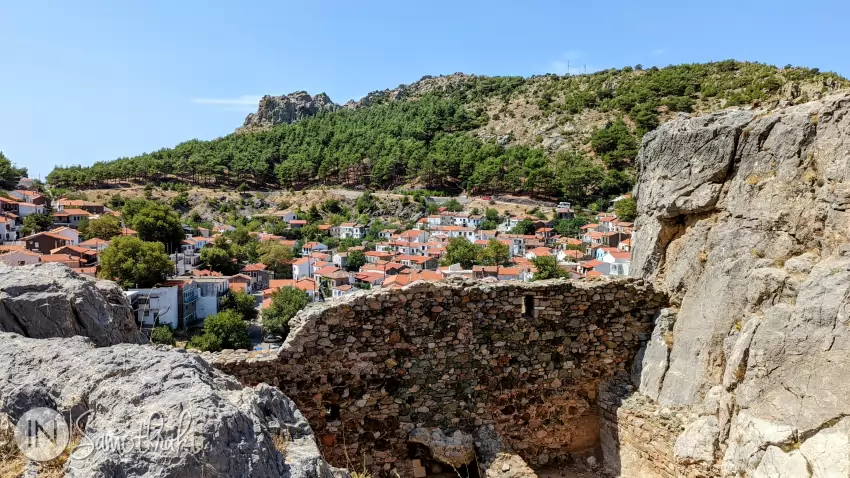
At one end of Chora, in the northeastern part, the ruins of the medieval castle located on a cliff top dominate the town from a height of almost 250m and constitute the main tourist attraction in the capital of the island of Samothraki.
Price and Visiting Hours
Usually, the fortress can be visited from April 1 to October 31, from Thursday to Sunday, between 8:30 AM and 3:30 PM.
Entrance to the Chora Castle is free.
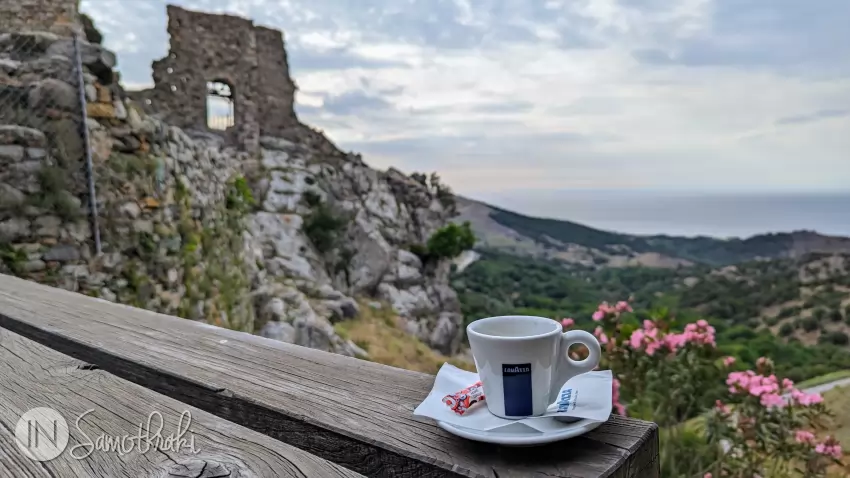
Right next to the entrance is the O Pyrgos ("The Tower") Cafe, with a very beautiful view of the fortress and the northwestern part of the island.
History
The fortress covers an area of 1880 m² and was built in 1431-1433 by the Gateluzzi family. The Gateluzzi family, of Genoese origin, ruled Samothraki for a period of 25 years, starting in 1430. The construction of the fortress was not an isolated action, but was part of a more complex set of works to fortify the island with defensive towers, to protect it from enemy attacks. Three defensive towers are also found at Palaiopoli, and another tower is located on the beach of Fonias.
Palamedes Gateluzzi, a member of a wealthy merchant family from Genoa, had acquired control over the islands of Samothraki, Limnos and Lesbos and the coast of Thrace from the Byzantine emperor John V Palaiologos, in exchange for his help in taking over the throne of Byzantium in opposition of John VI Cantacuzinos.
Throughout history, the fortress changed hands several times, being occupied for a good part of the time by the Turks (1456-1460, 1479-1770, 1774-1912), the Venetians (1466-1479) or the Russians (1770-1774), until in 1912, with the liberation of the island of Samothraki, it returned definitively to the Greeks.
Until 2015, when it was demolished, a building constructed during the Metaxa dictatorship (1936-1940) stood on the premises; this building had operated as the island's police station.
The Architecture
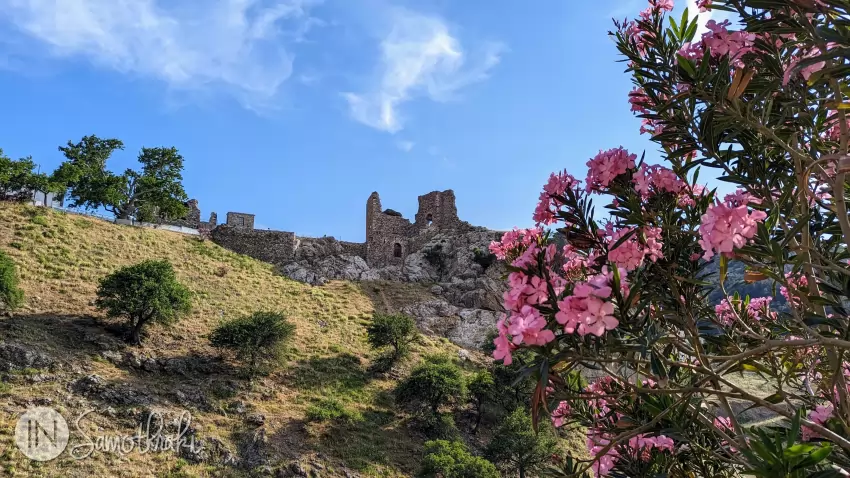
The architecture of the fortress was dictated by the rugged terrain.
Thus, to the east, where the slope was gentler, the main entrance was positioned, and the fortress was well fortified with a square and a circular tower and a wall. Together with the northern and southern walls, these form the outer fortification.
The inner fortification, consisting of a wall and a square tower, is located in the western part, where the cliff is steep and makes the place inaccessible.
The Outer Fortification
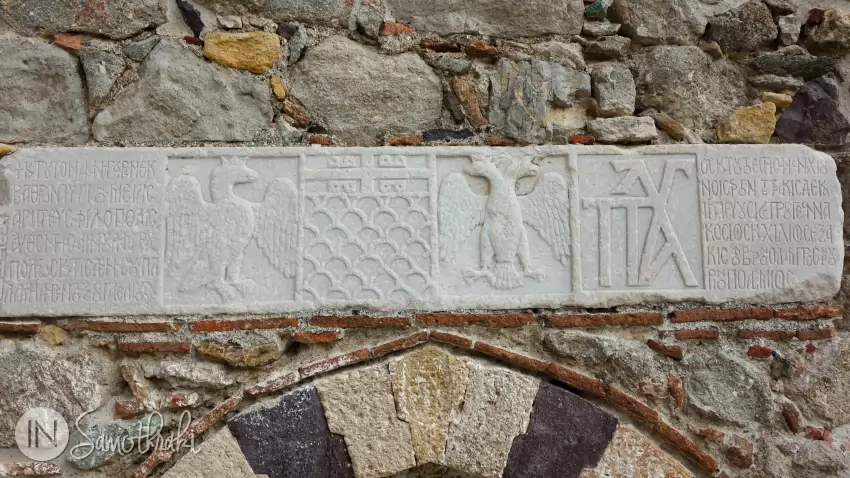
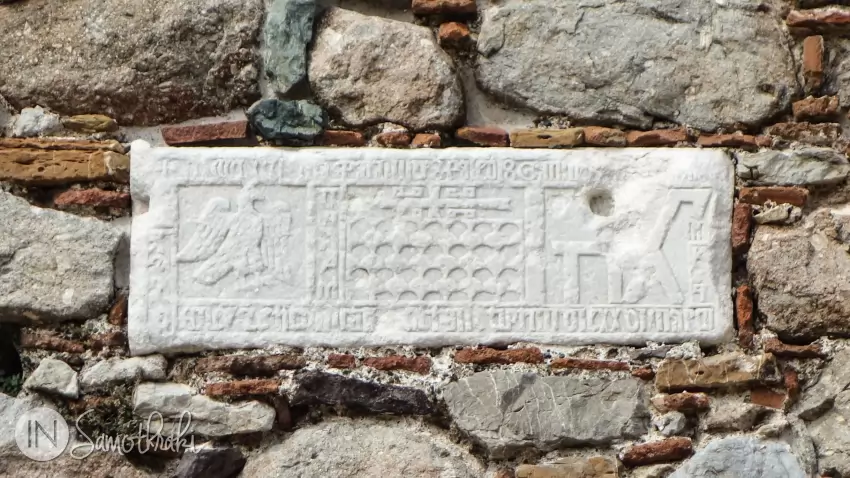
As you climb the stairs to the entrance to the fortress, you will see on the right the marble inscription on the south wall of the square tower, which shows that it was built in 1433. The images represent, from left to right, the Gateluzzi emblem (an eagle), the Genoese family coat of arms, the Palaeologus emblem (the double-headed eagle) and their monogram. On the left is mentioned the name of the builder - Constantine.
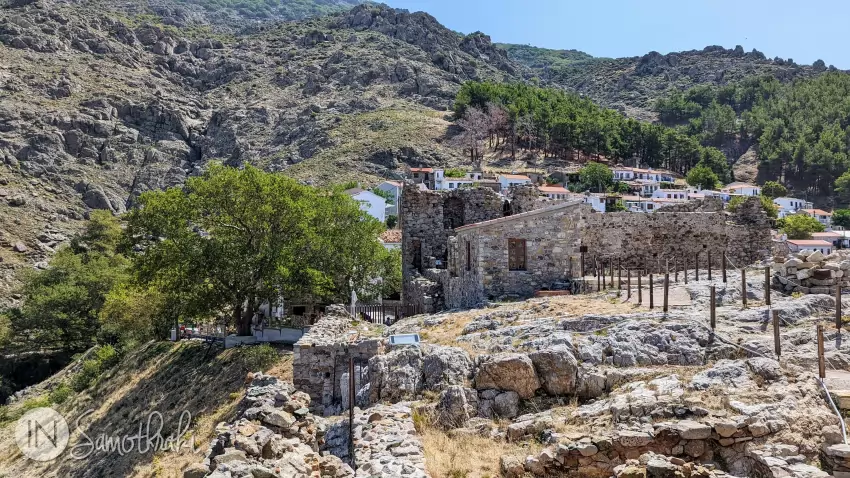
The tower is currently 11.3 meters high and had three floors separated probably by platforms and wooden stairs, with narrow niches for defense. The entrance was on the second level, and on the first level was the largest cistern of the fortress, used to supply water to both soldiers and the island's inhabitants. The roof was supported by a column in the middle, the base of which is still visible on the bottom of the cistern. The well on the southern wall of the square tower was probably connected to this cistern.
The circular tower on the southern side (to the left of the entrance) was built during the Byzantine period, when the work on the outer fortification was completed. The tower had no entrance and was filled with earth as it was built, so as to form a platform on which the cannons were probably placed.
The outer fortification occupies 950 m² and was used to shelter the inhabitants of the area in case of need.
The Inner Fortification
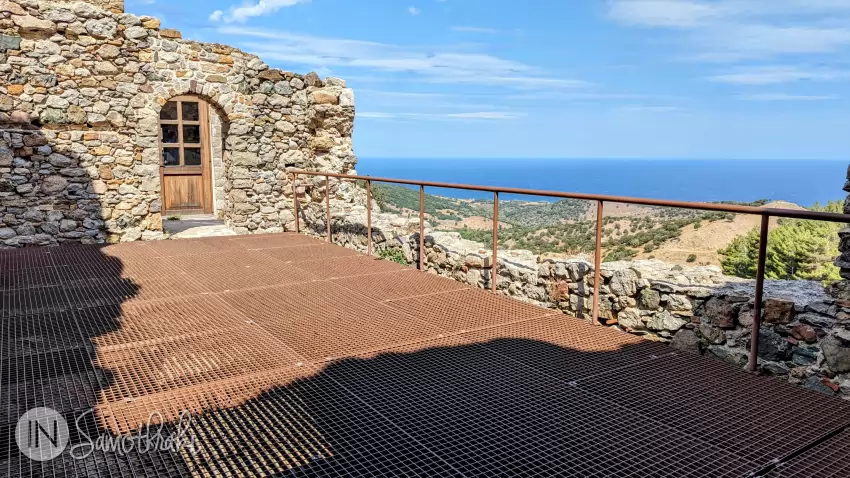
As you advance on the wooden footbridge, you pass the square tower of the inner fortification on the left, 13m high. The inscription on the marble slab embedded in the east wall mentions the year 1431 as the year of construction and again the name of the ruler Palamedes Gateluzzi (Palamedes Palaeologus Gatilusius dominus) and the builder Constantine. In the center of the slab is the family coat of arms, on the left the eagle-emblem, and on the right the Palaeologus monogram.
A stone staircase and an arched gate, from which defenders could throw hot water or oil on enemies, lead to the inner fortification (930 m²), where there were two cisterns located on the north and south sides of the square tower, respectively. Also to the south are the ruins of a chapel, probably built in the post-Byzantine period.

 Chora, the Perched Capital of Samothraki
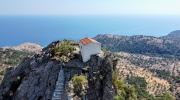 Panagia Krimniotissa, the Church on the Rock
 Therma - Mountains and Sea in Samothraki
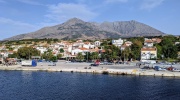 Kamariotissa - Welcome to Samothraki!
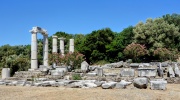 Sanctuary of the Great Gods in Samothraki
Have you been there?
Tell everyone about your experience!