


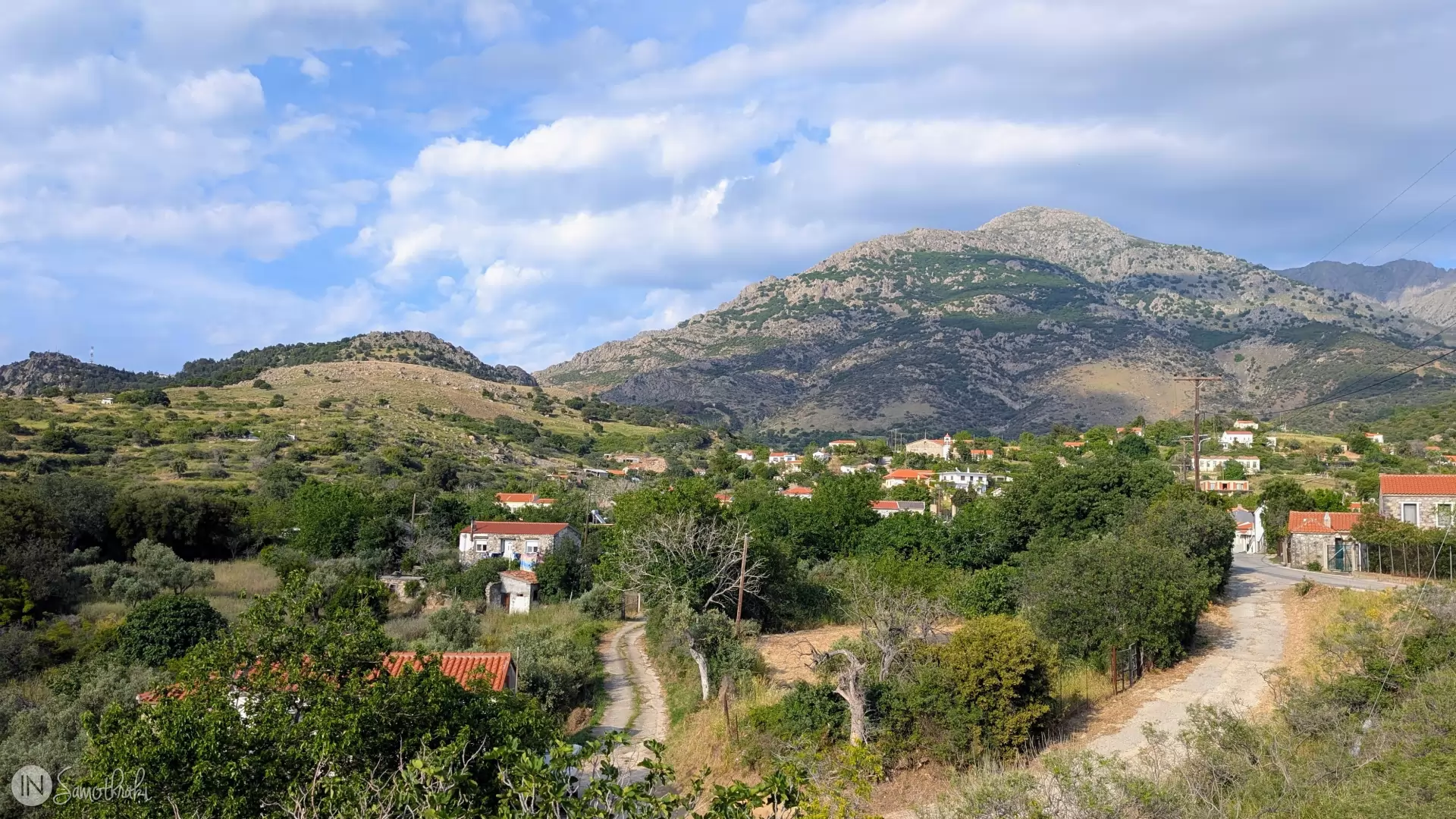
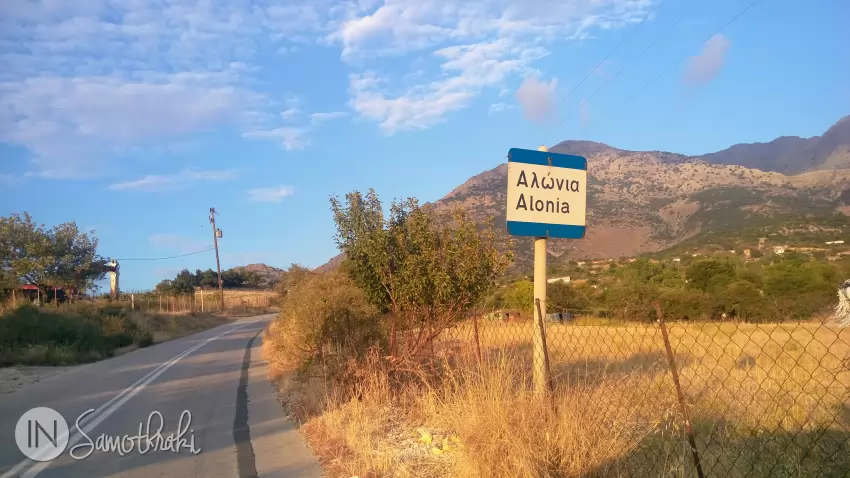
Alonia is located in the northwest of Samothraki Island, further inland, 3 km from Chora and 5 km from Kamariotissa. It is not a tourist village and probably won't be among the sights you visit if it's your first time on the island. However, if you are a lover of Samothraki, you will surely want to learn more about the daily life of its residents. And Alonia is the right place for that - it has no taverns, no accommodation, and very few tourists stop by.
Alonia is a rarity in the island's demographic landscape; its population has increased by 54% compared to 2011, counting 448 permanent residents according to official data from the most recent census (in 2021). The village has thus become the second-largest settlement in Samothraki after the port of Kamariotissa, surpassing the capital, Chora.
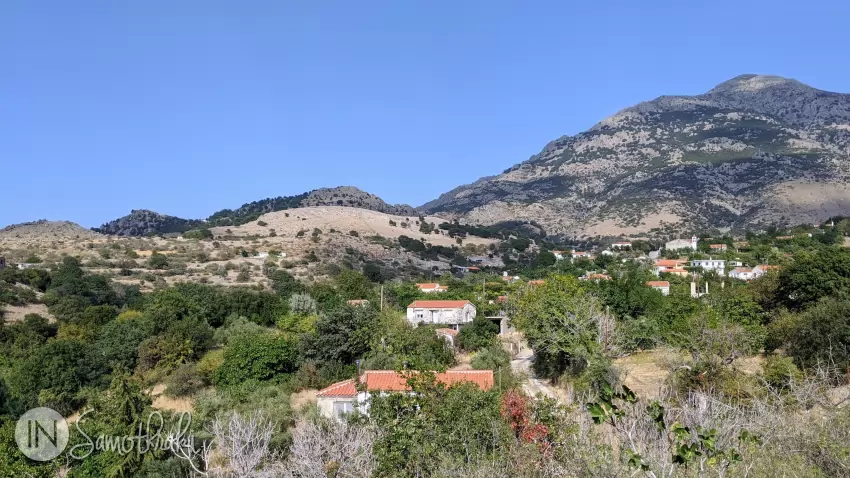
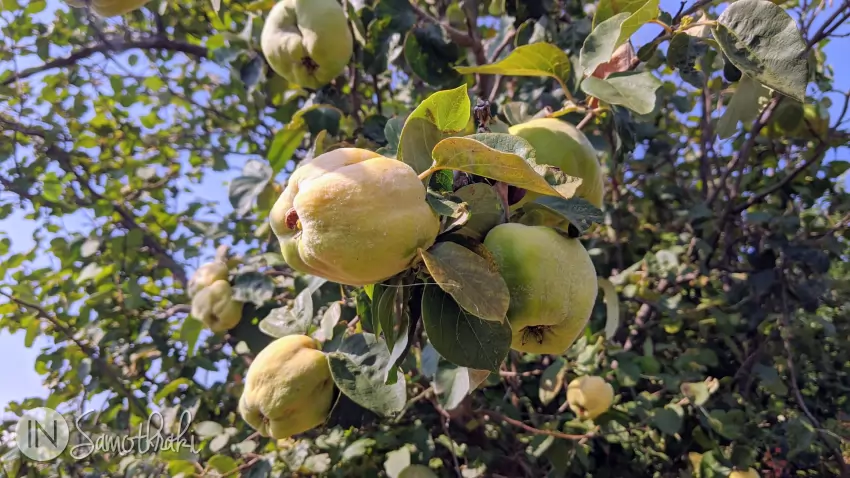
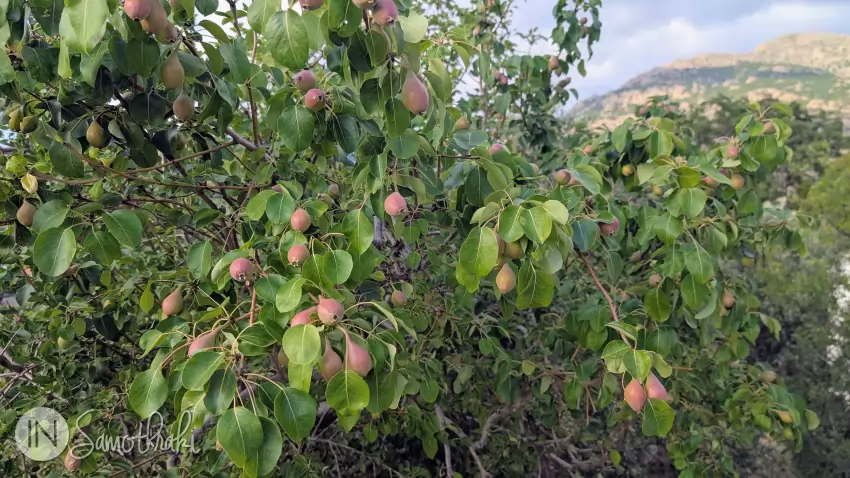
Unlike the northern part of the island, which is dominated by plane trees, in Alonia you are more likely to find gardens and orchards of fruit and olive trees. This is due to a different, typically Mediterranean microclimate. In the village courtyards, you'll spot fig trees, mulberry trees, quince trees, grapevines, pomegranates, small red pear trees (a variety that was much more widespread in the past and of which the islanders were very proud), and even palm trees.
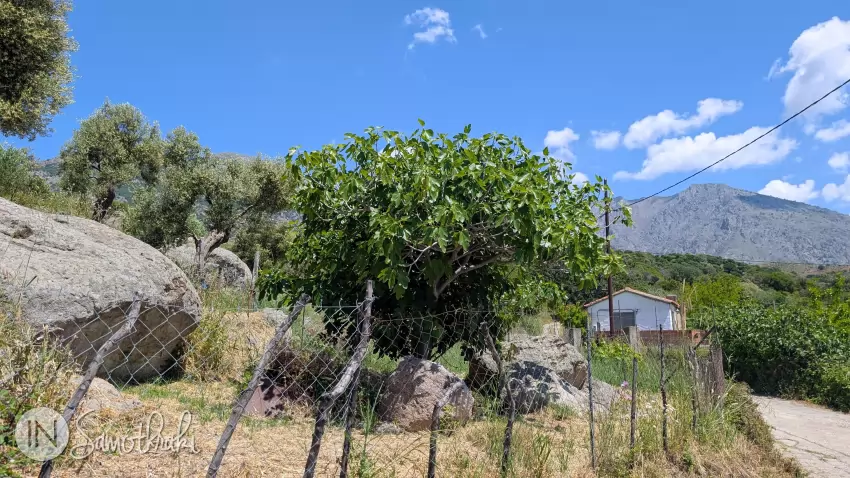
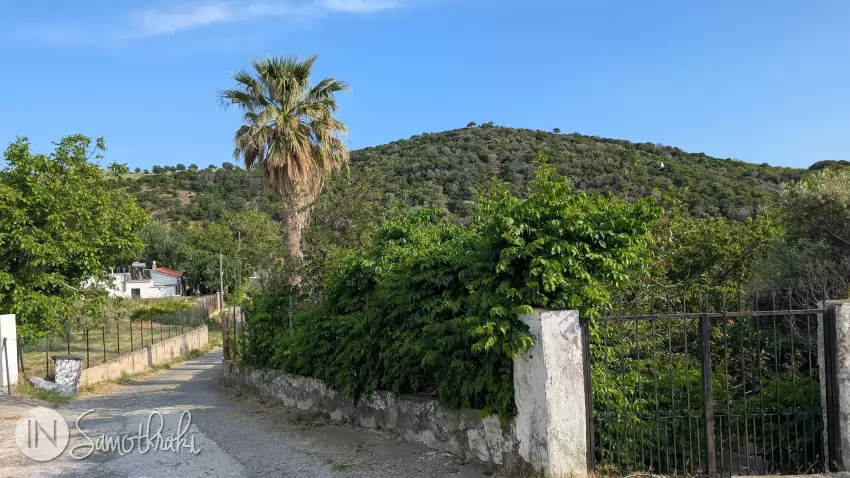
Beyond Alonia, towards the sea, lies the agricultural area of Samothraki, suggestively named Kampos (κάμπος translates to "field, plain"). As such, the inhabitants are primarily involved in agriculture. In fact, the very name of the village is closely linked to this traditional occupation - the word alonia means "threshing floors". Until around the 1960s, every family had its own threshing floor - a circular, packed-earth area where they would thresh their grain harvests during the summer.
During the same period, around the middle of the last century and up until the 1970s (when more and more locals began migrating to Germany), the village was well known for its skilled traditional musicians and for the local parties and traditional dances organized here. Nowadays, a few parties are still held during the tourist season, especially in August (just like in the other villages on the island).
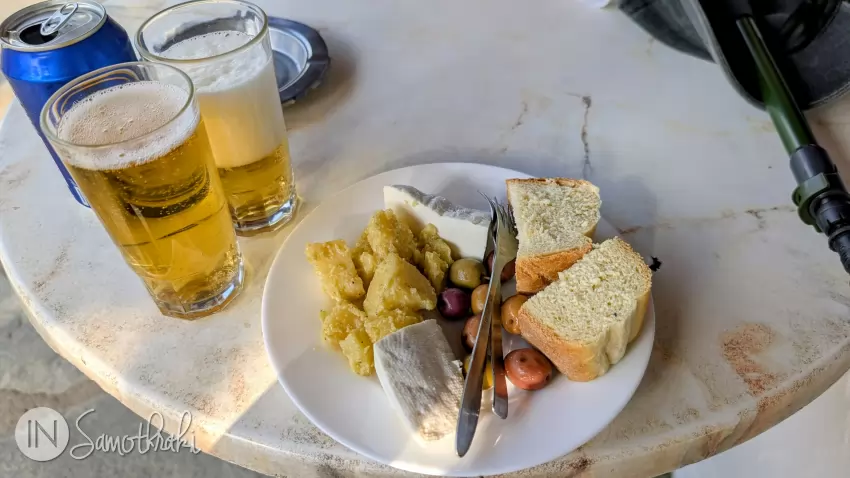
Alonia doesn't have any taverns, but it does have two small traditional cafes where locals gather to chat over coffee, tsipouro, and mezedakia (you can learn more about the latter in the article about traditional food in Samothraki). Many of them speak the island's dialect, and even if you know Greek, you might find it hard to understand them.
The first cafe is located at the entrance to the village coming from Kamariotissa (or from Makrylies, if you are coming from the south of the island), opposite the Agios Nektarios chapel.
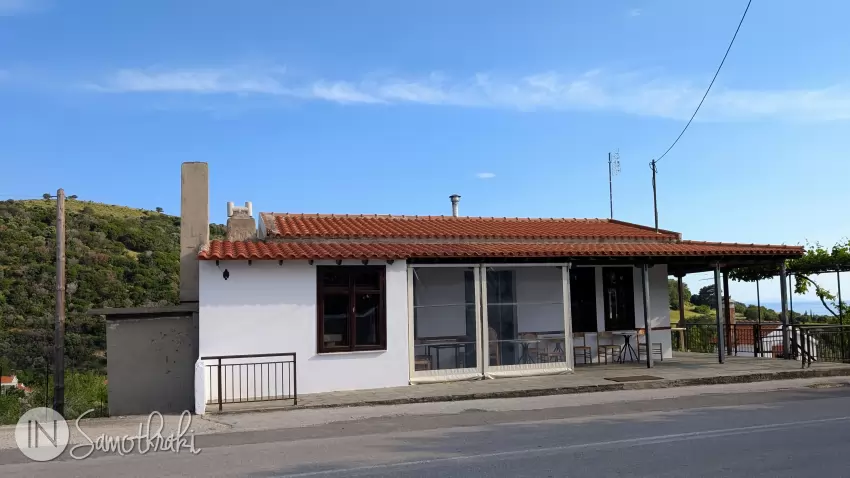
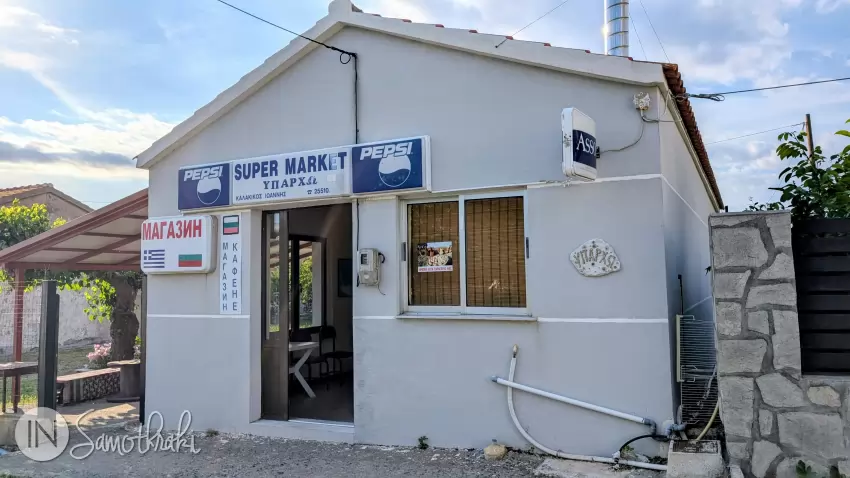
The second cafe is a bit further up, on the left side of the road, and is called Yparcho. A supermarket operates in the very same location. The cafe takes its name from a well-known song (Yparcho - "I Exist") by the popular singer Stelios Kazantzidis.
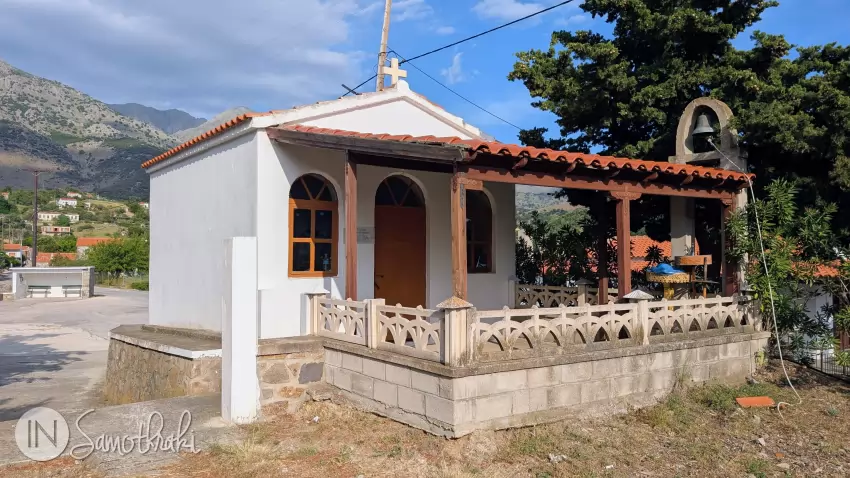
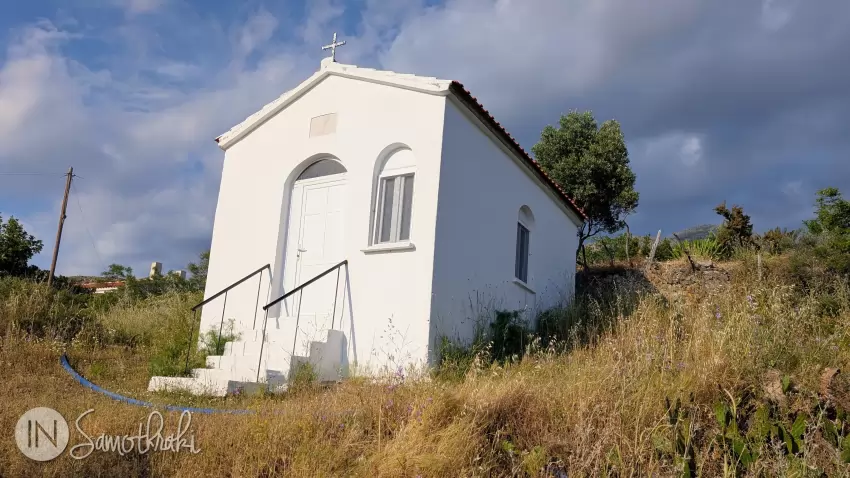
I suggest leaving your car at the entrance of the village, in the parking lot next to the chapel (where there is also a bus stop). The chapel is dedicated to Saint Nectarios (Agios Nektarios) and was built in 1972, slightly above the road in an area with a beautiful view, which also features a children's playground.
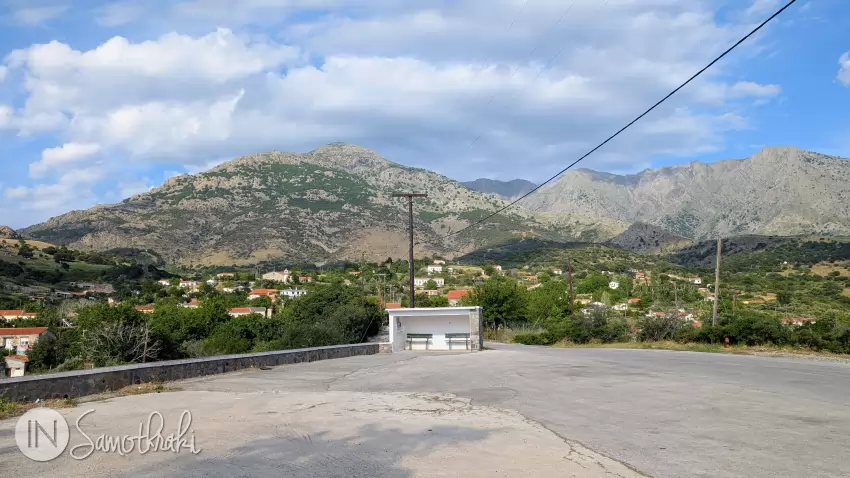
From here, take a leisurely stroll up the village streets to the main church of Alonia, which you can spot from a distance. Take a look at the houses - some are traditional, built of stone in the island's style, while others are new and modern, featuring lush, well-kept gardens.
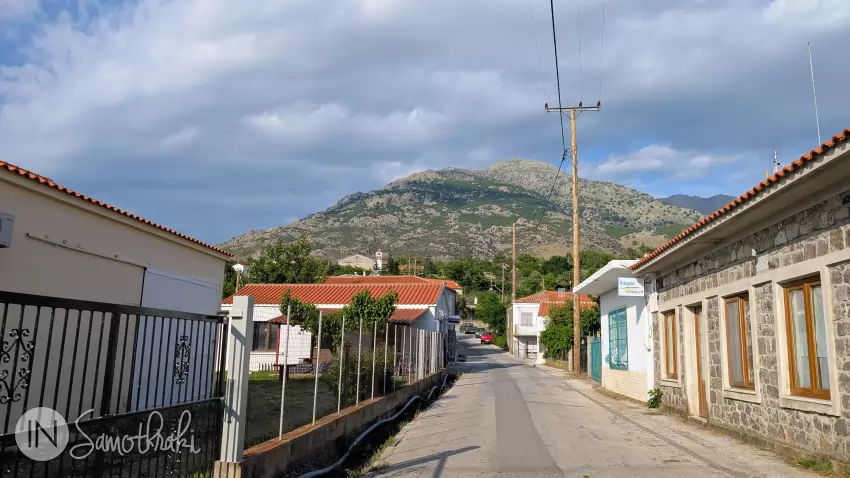
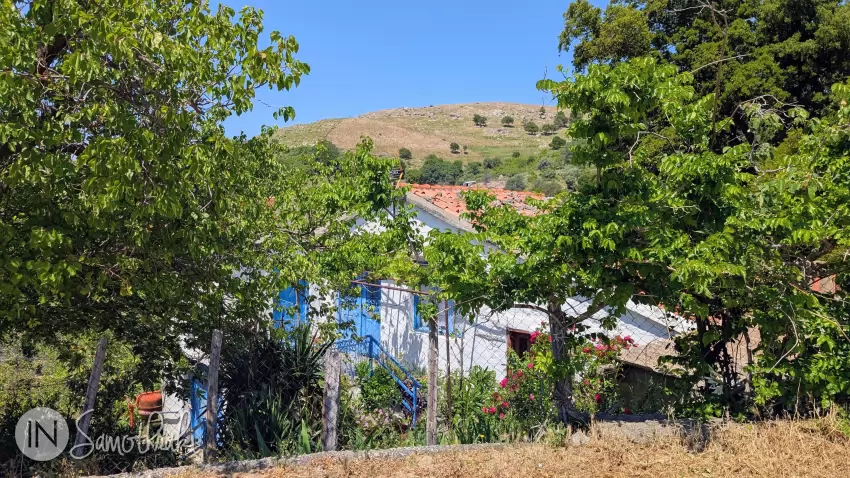
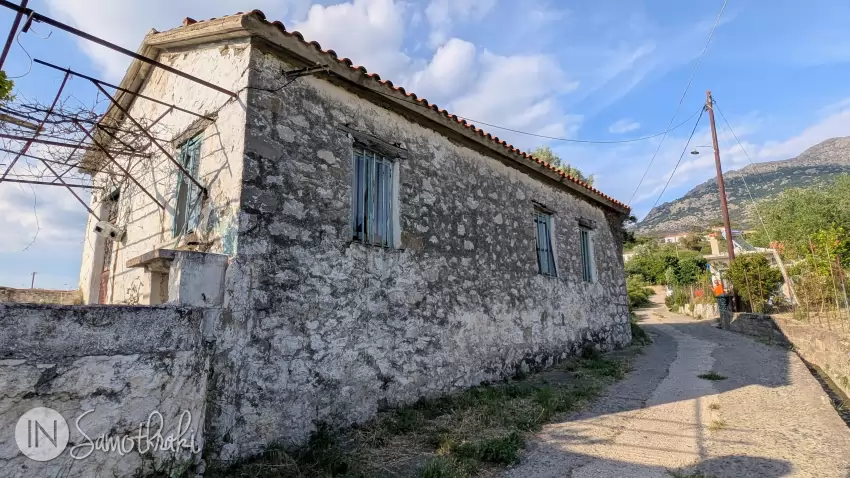
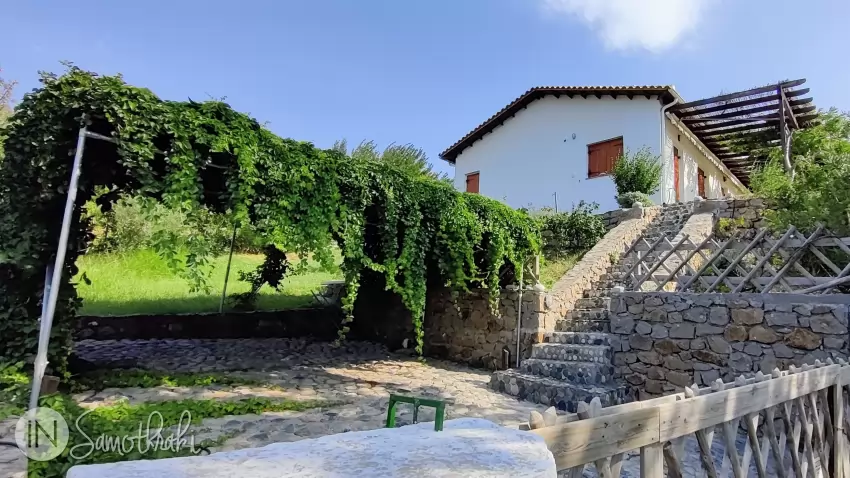
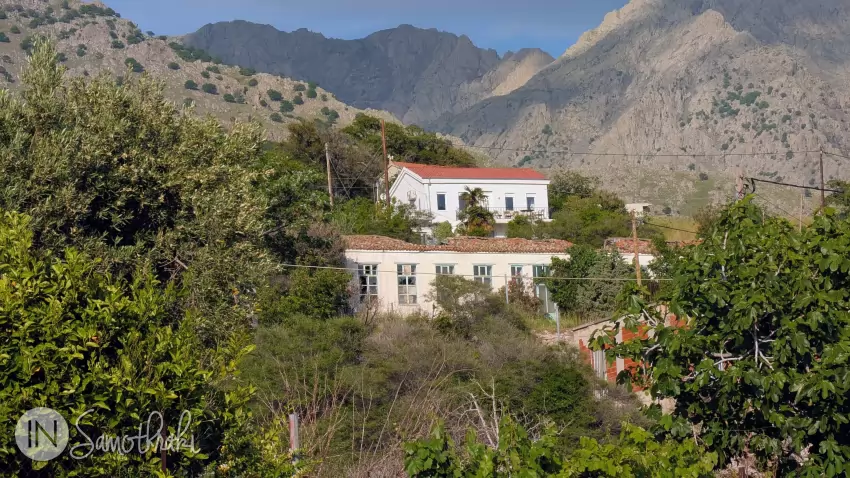
From the main road, looking towards the right of the church, you can also see the village's former school, with Mount Saos standing behind it. Unfortunately, it is now in ruins - the windows are broken, and parts of the roof are missing.
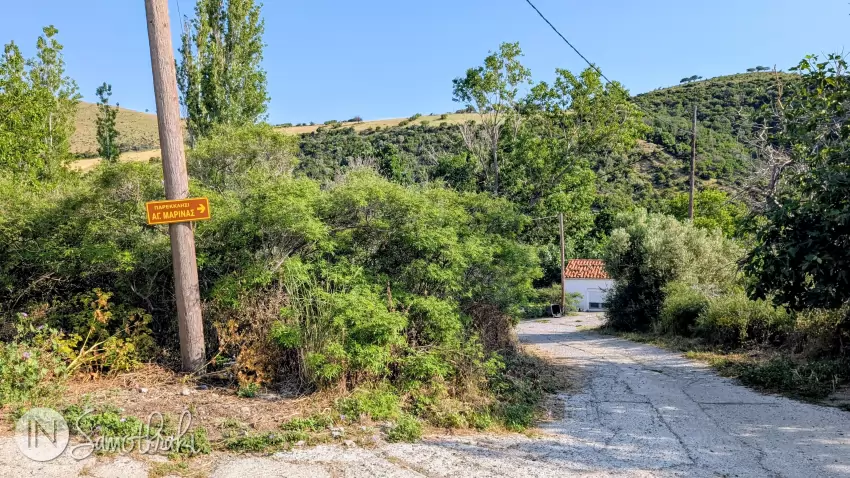
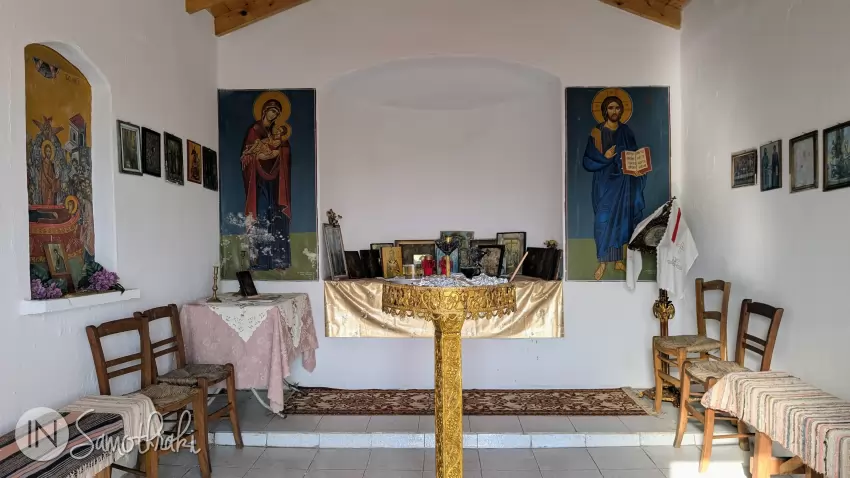
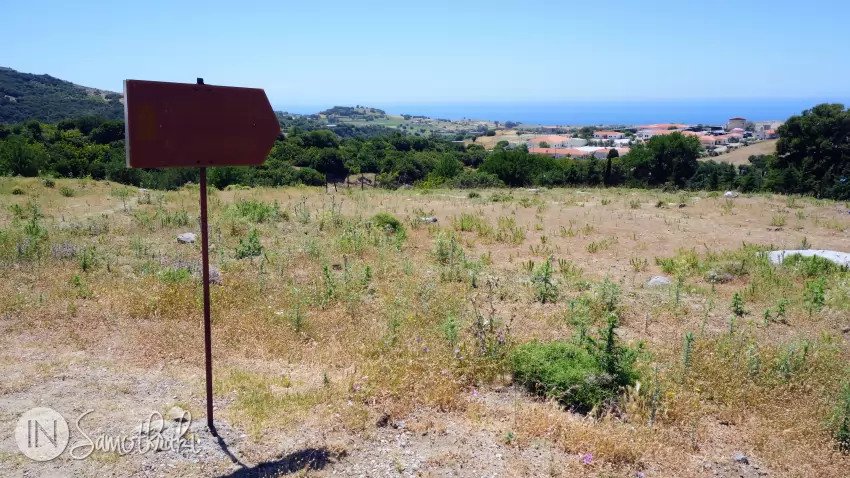
Before reaching the church, an arrow pointing right indicates the way to Agia Marina. If you follow it, you will reach a small chapel built in 1963 and dedicated to Saint Marina.
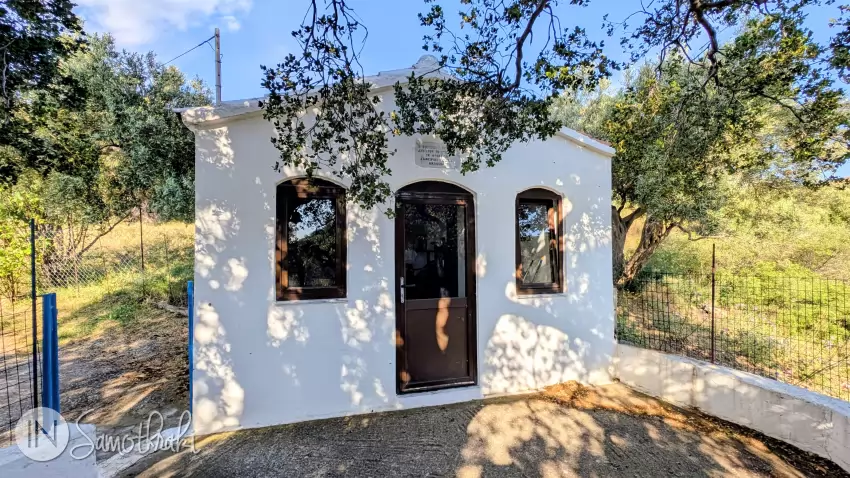
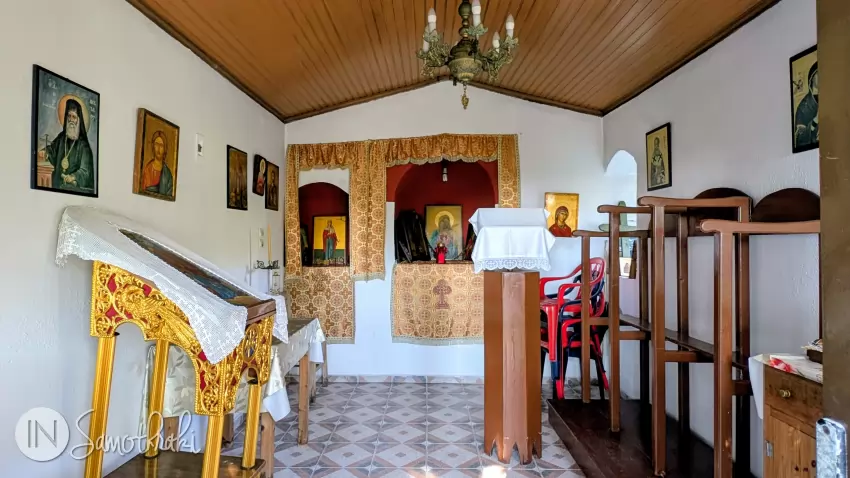
Higher up from the main road, but towards the left, there is another small church. It is dedicated to the "Presentation of the Virgin Mary in the Temple" and was built in 1971.
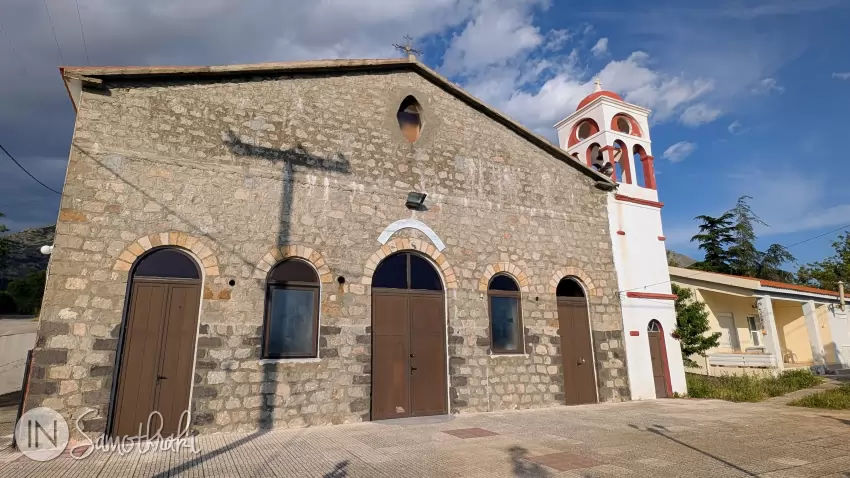
Returning to the main road, in the upper part of the village near the exit towards Chora, you will find the Agios Modestos Church. It is dedicated to Saint Modestus and houses a small part of his holy relics. The construction of the place of worship began in 1955, and it was consecrated in 1972. The locals played an essential role in building the church, carrying the construction stone from a nearby hill with the help of animals. Unless you visit on a Sunday morning, you will most likely find the church locked.
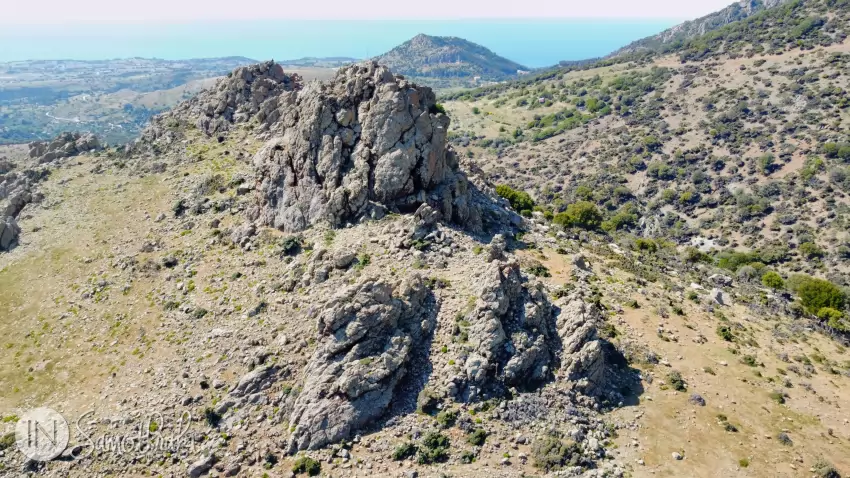
From the church, following some dirt roads towards Xiropotamos, you can reach Agia Anemi hill in about an hour. At its peak, at nearly 500m, lie the remains of an Iron Age settlement, and nearby are the ruins of the small Byzantine church of Agia Anemi ("Saint of the Winds").
Also in Alonia, but on a side road leading west outside the village, lies the Samothraki military base. If you ever happen to hear strange booming sounds on the island, know that they come from the training exercises here.
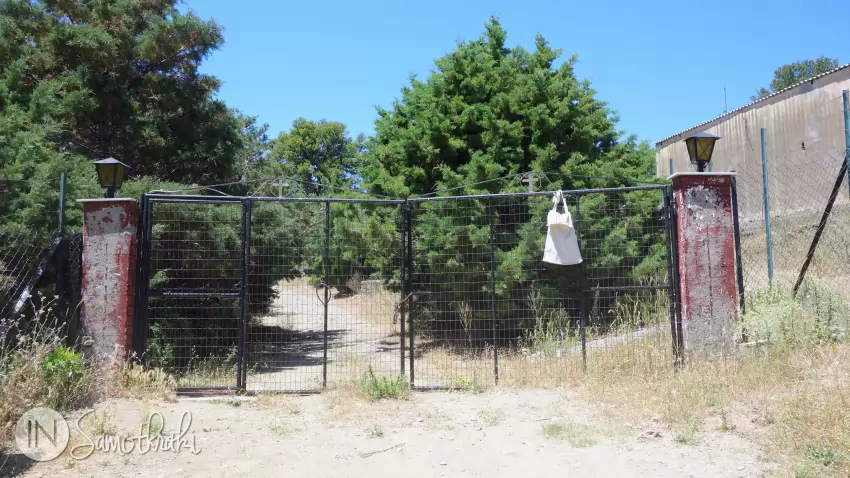
Near the military base is also the only monastery in Samothraki (excluding the Monastery of Christ near Therma, of which only ruins remain). This is the Agios Athanasios Monastery, dedicated to Saint Athanasius. In 1771, it became a metochion (monastic dependency) of the Iviron Monastery on Mount Athos. Back then, the monastery was wealthy, owning fields, vineyards, a mill, and livestock. Most of these were gifted by the locals as a sign of gratitude for the miracles performed by the saint.
Saint Athanasius is one of the most beloved saints in Samothraki and is considered the protector of livestock breeders and a healer of those with mental health issues. It was believed that those who slept overnight inside the church would be cured of their illness. The cypress tree in the church courtyard was also considered miraculous, and it was a custom to break off a small branch to keep in the home. On January 18th, the saint's feast day (he is also celebrated on May 2nd), a large celebration would take place after the service, featuring food, drinks, and traditional dances.
Since 1965, the Agios Athanasios Monastery has been administered by the Metropolis of Alexandroupoli. Today, it seems to have only one monk left, and it preserves the only remaining threshing floor in Alonia. Unfortunately, I have never managed to find it open.

 Chora, the Perched Capital of Samothraki
 Panagia Krimniotissa, the Church on the Rock
 Therma - Mountains and Sea in Samothraki
 Kamariotissa - Welcome to Samothraki!
 Sanctuary of the Great Gods in Samothraki
Have you been there?
Tell everyone about your experience!